

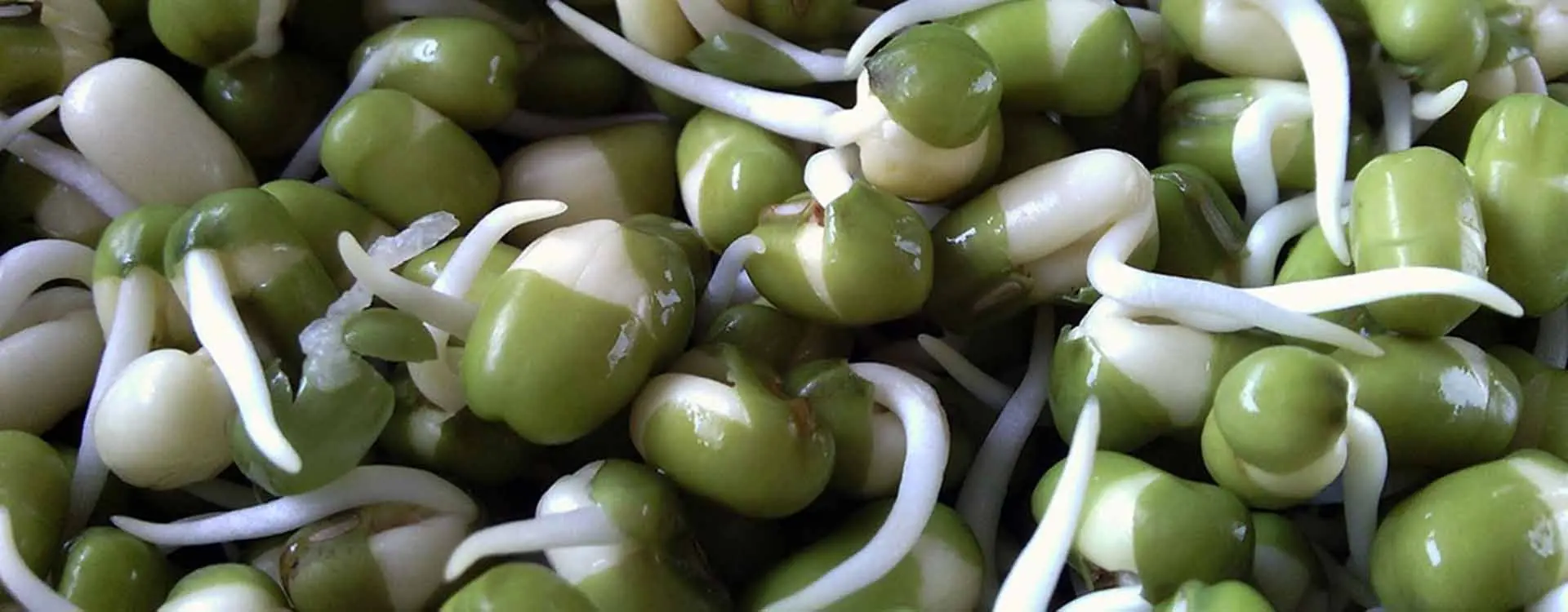
What is tofu and what are its secrets?
All about tofu…
Goal: to find out all about tofu; its nutritional value, origin, varieties, and why tofu isn’t always necessarily good for your health or the environment.
What is tofu and why should you be careful when consuming it?
Tofu is gaining popularity in the West, and its consumption has risen sharply in recent years, especially among vegans and vegetarians. In it, they’ve found the perfect meat substitute: a healthy food rich in vegetable protein, which doesn’t contribute to animal suffering and has a minimal impact on the environment … Or does it?
True, there’s no animal suffering associated with its production, but is the consumption of tofu good for our health and the planet? (Spoiler alert: not always!)
Below, we’ll tell you the whole truth about the cultivation of soybeans, the controversial ingredient with which tofu is produced. We’ll also talk about its benefits and nutritional value, as well as the different varieties that are out there, for example, fermented tofu. (If you’re already a reader of our blog, you’ll know that fermented foods are our passion and that we subject all our cheese alternatives to fermentation to augment them with healthy properties).
But let's not deviate, and let’s start at the beginning ….
What is tofu made of?
Tofu is an ancient Chinese delicacy, made from dried soybeans that are soaked in water, crushed, and boiled. After processing, a pulp (or okara) remains, which is then separated from the liquid byproduct, which is commonly known as “soy milk” – or, after the European Union passed recent legislation to eliminate confusion, it’s now known as “soy drink”.
Saline coagulants are added to soy milk to separate the curd from the whey. Then any excess liquid is removed, and an enzyme called rennet is added to curdle it; the resulting effect being the creation of tofu. It’s a process similar to the production of fresh cheese.
Despite the many benefits of this food, which was introduced in Europe over a century ago, there are many who go out of their way to avoid soy at all costs.
Soybeans are a legume with a very high nutritional value; that, however, doesn’t shield the ingredient from controversy around the world. So much so that, many products use the label “no soy” as a marketing prompt to drive sales, taking advantage of the misconceptions that exist around this popular product.
So is soy good or bad? Like everything, it depends. But one area of concern is the origin of its harvest.
The origin and uses of soybeans
In Europe, we consume two types of soy: one that’s cultivated on our continent, and another which is imported from the United States (75% to be exact).
More than 90% of soybeans grown in the United States are transgenic (genetically modified), as is 70% of global production. And, although growing genetically modified soybeans is banned in the EU, importing them for processing is not.
If we take into account that 85% of soybean production is used to extract oil and that soybean oil is the second most used oil by the food industry (after palm oil), there’s a good chance that you’re already consuming transgenic soybeans. And, although there is, as of yet, no consensus in the scientific community, there are many experts who claim that soybeans contribute directly to the symptoms associated with different allergies.
“By consuming organic soy and food, you avoid GMO products”
And that’s not the only way genetically modified soy gets into our diets. The byproduct that remains after extracting the oil is used to make flour for animal feed. And, if you consume animal meat or drink dairy milk ... you’ll be indirectly consuming this too.
To ensure that the soy you consume, directly or indirectly, doesn’t contain genetically modified organisms (GMOs), always make sure you buy certified organic products. This way, you’ll not only protect your health, but the environment too. Which brings us to the next point …
Environmental impact of soybeans
Most of the genetically modified soybeans grown around the world are done so by Monsanto. The US company genetically modifies seeds from thousands of plants to make them resistant to glyphosate, an insecticide that the World Health Organization (WHO) has classified as “potentially carcinogenic” and which, paradoxically, is manufactured by Monsanto itself. Business is business after all …
Farmers and those working alongside them are at risk from direct contact with glyphosate. So, too, are the rest of us, since this pesticide and its harmful effects are often ingested when consuming non-organic products.
Not only that, but the transport of soybeans also generates CO2 emissions and, in addition, is one of the largest consumers of water on the planet. In the United States, they’re even cultivated in desert regions, where they demands the few existing water resources; while in Brazil, cultivating soybeans is responsible for a disproportionate amount of the deforestation of the Amazon Rainforest.
It’s not surprising then that producers in the meat industry use that argument to defend their business, that is, manufacturing a soy burger requires the same (or a greater) amount of water than for a beef burger.
To calculate the hydrological footprint of a food type, the water resources used throughout the chain are taken into account. In the case of livestock, in addition to the water consumed by the animal, the water used for the production of its feed is added. The vast majority of meat’s water expenditure can be attributed to the production of fodder, which is largely made of soybeans.
“whether a meat-eater or not, from an environmental point of view, harvesting soybeans represents a danger to our planet”
So, whichever way you look at it, whether a meat-eater or not, from an environmental point of view, harvesting soybeans represents a danger to our planet. And not only are meat and dairy consumers responsible, but so too are those who consume vegan or non-vegan products containing soybean oil.
If you’ve already taken drastic action and removed tofu or soy from your diet, then you might want to rethink. Confused? Read on, and we’ll clear a few things up for you.
Do you remember that above we told you that about 70% of the soybeans grown worldwide were transgenic? The good news is that there are still 30% which aren’t genetically modified – which therefore won’t harm you or the planet. In fact, it’s quite the opposite. As you’ll see below, soy has nutritional properties that make it what some people call a “superfood”.
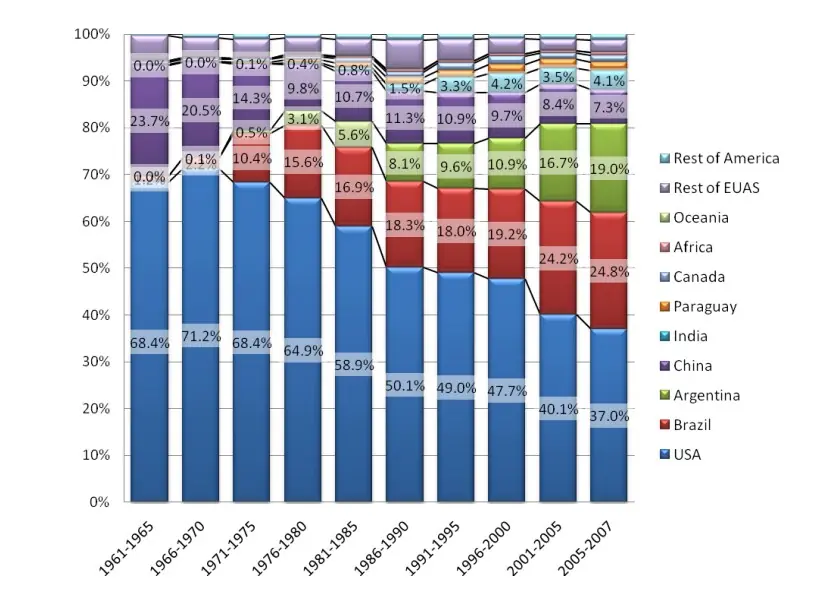
Evolution of soybeans cultivation in the world. Credit: ifama.org
European cultivation
In Europe, Italy, France, and Germany are the largest producers of soybeans. The EU also imports organic soy from countries such as Benin, although this comes at a greater environmental cost due to geographical distances and the impact of transportation.
While it’s true that Europe is the continent that produces the least amount of this legume, thanks to agreements such as the Amsterdam Declaration, which aims to reduce dependence on American soybeans and limit deforestation, production has tripled in the last ten years.
The good news is that 100% of European production is free from GMOs, which remain banned within the EU framework. (Except for corn, which is almost exclusively produced in Spain).
Better yet, organic soy-based products are very easy to identify. The Bio or non-GMO label are the ones you have to look out for if you want to avoid paying for soy which devastates the environment as well as contains potential risks to your health.
Nutritional value of tofu
Tofu is an excellent source of plant protein. It doesn’t contain cholesterol, lactose, gluten and, in addition, it’s very low in carbohydrates – all of which are characteristics that make it a great food for humans and animals alike.
Although the method of making tofu is very similar, the nutritional values vary depending on the type and brands that sell it. Usually, firmer tofu has a lower water content and therefore has a higher concentration of calories and nutrients.
Regarding natural firm tofu, we find a great many variations on supermarket shelves, as you can see in the table below – with protein content ranging from 11.1g–17g per 100g.
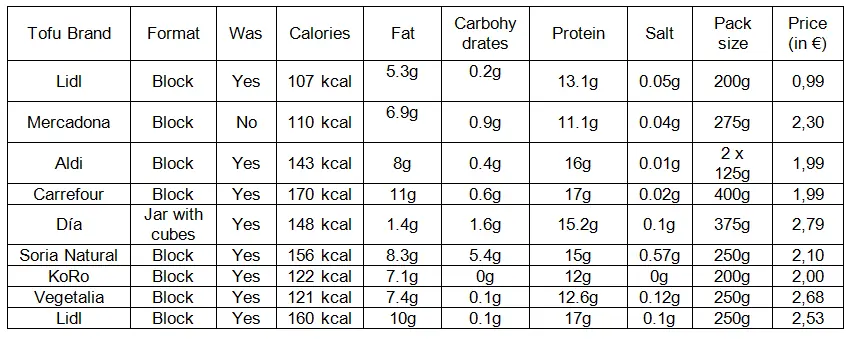
The tofu with the highest protein content that we’ve found in Spain is Aldi tofu, in its smoked version. This GutBio brand product contains 22g of protein per 100g. Though, it has a high salt content (2.2g) as well as a higher number of calories (198 kcal per 100g).
In addition to being a good source of protein, tofu contains all the essential amino acids, that is, those which our bodies are unable to produce themselves and therefore require through dietary means.
It also provides vitamins such as A, E, K, and some of those from group B (riboflavin [B-2], thiamine [B-1], niacin [B-3], pantothenic acid [B-5], biotin [B-7], folate [B-9], and vitamin [B-6]). In addition, it also contains minerals such as iron, calcium, potassium, zinc, phosphorus, manganese, copper, and magnesium.
As for fats, the highest proportion of fats in soy (and tofu) are unsaturated fatty acids. These include oleic acid (omega-9 fatty acid), and two polyunsaturated g-level acids, linoleic and linolenic acids (both from the omega-6 series).
What does tofu taste like?
For those who have yet to try tofu, you may be wondering what it tastes like …
The truth is that raw tofu tastes, well … quite bland; not dissimilar to Burgos cheese, which is often consumed by those on slimming diets and a cheese which has 0% fat.
But, although it seems contradictory, that happens to be one of the main benefits of tofu. Through different types of marinades and different methods of cooking, you can incorporate it into almost any recipe, sweet or salty! (Below we’ll tell you all the secrets so that you never get tired of cooking with it).
At Veggie Karma, we ferment it and use it to make our delicious feta cheese alternative, Lover Dose. In addition, in this same recipe, we also incorporate tempeh, another product from soy, which is also fermented. This way, we get a delicious and healthy mixture, which contains probiotics that are beneficial for your intestinal flora and your immune system.
Types of tofu
Although its manufacturing process is broadly the same, there are different types of tofu. Their main difference lies in the firmness and the amount of water they contain.
Varieties such as silken tofu or soft tofu have more water in their recipe but also fewer calories, protein, carbohydrates, and fats.
As for firm tofu, we can divide those into four varieties.
Silken tofu/Japanese tofu
Its texture is very creamy, similar to curd and is the one that contains the largest amount of water. Unlike traditional tofu, it’s made by coagulating soy milk, but without curdling it.
It works great as a condiment like vegan mayonnaise, as well as in smoothies and desserts. If you get the opportunity to try a chocolate mousse made with silken tofu, you’ll instantly fall in love with its texture.
You’re unlikely to find it in supermarkets, though you shouldn’t have trouble sourcing it in vegan stores and, of course, in Asian food stores.
Soft tofu
It’s mostly used in Asian cuisine and is somewhat firmer than silken tofu. Though it has a creamy, smooth texture.
It absorbs flavours very well, so there’s no need to marinate it in advance. You can use it in stews or soups as a source of protein. Add it at the end of the recipe, when you’re about to turn off the heat. Let it sit for a few minutes, and you’re good to go.
Grilling or frying isn’t recommended, since it will end up falling apart.
Tofu firm
This is the most common variety in supermarkets; you can find it in almost all the large chains in Spain, including Mercadona, Lidl, Aldi, Día, Carrefour, and Alcampo.
It’s easy to cut and works well in any recipe. It can be baked, grilled, and fried without fear of breaking. However, to use it, you have to press and drain the water beforehand. The easiest way to do this is by wrapping the block in absorbent kitchen paper, then placing it between two chopping boards and thereafter adding a weight on top.
Tofu extra firm
This variety has much less water, something that is immediately noticeable in its texture. It’s difficult to soak up the marinade, but it’s the one that works best in a stir fry or when grilling, without having to go through a draining process.
It’s quite difficult to find in Spain, so we can’t be sure if you’ll be able to get your hands on any. For that reason, firm tofu is your best option; you’ll just need to drain and press as appropriate.
In addition to these four main varieties of tofu, there are also some other types out there:
Smoked tofu
Although you cook with it, smoked tofu is delicious raw, in salads, and in snacks. Its texture is firm and reminiscent of a semi-cured cheese.
Soria Natural and GutBio are two of the companies that sell organic smoked tofu. Both are very rich in flavour; but be aware that Aldi’s smoked tofu (GutBio) contains much more salt (2.2g per 100g).
If you’re looking to lower your salt intake, smoked tofu from Soria Natural is a better option as its salt content is almost four times lower (0.57g per 100g).
Flavoured tofu
Tofu is also available in flavoured versions, already marinated, which makes it much more convenient for you and allows you to prepare your dishes in less time.
The German brand Taifun, which you can find in vegan stores and some herbalists, offers organic tofu with flavours such as curry and mango and turmeric, as well as more traditional Mediterranean flavours such as tomato and basil.
Depending on where you live, you can also find tofu at your nearest Aldi in a myriad of flavours. They don’t tend to sell them in smaller stores, but if you visit a large Aldi, you may find different varieties of tofu, such as ones with peppers, almonds, hazelnuts, wild garlic, and basil.
Fermented tofu
Our vegan alternative to feta cheese, Lover Dose, is made from fermented tofu, tempeh, and miso; and it’s preserved in first pressed olive oil. In addition, these delicious feta chunks are seasoned with dried tomatoes, basil, and rosemary, which adds a unique flavour to your dishes.
Though there’s no need to overcomplicate it: they’re also tasty as they are, as an appetiser.
You can also find fermented natural tofu, without any flavouring. The problem is that it’s not usually to everyone’s taste. If you decide to cook it, to give it a different flavour, be aware that you’ll lose all the beneficial properties that fermentation provides. So, it’s better to get some LOVER DOSE. Not only is Lover Dose tasty, but it’s full of probiotics too. Everyone loves it!
Posted in:
News
Related posts
-
 Fair Trade Cashews: Our Ethical Choice
At Veggie Karma, we only use ethically-sourced cashews to create our vegan cheese substitutes. If you want to know...Read more
Fair Trade Cashews: Our Ethical Choice
At Veggie Karma, we only use ethically-sourced cashews to create our vegan cheese substitutes. If you want to know...Read more -
Lactose-free cheese and other cheeses that intolerants can enjoy
Have you ever suffered from gas, stomach cramps, nausea, abdominal pain, or diarrhea after consuming dairy...Read more
-
5 vegan appetizers for christmas
Do you want to eat your VK cheese in a different way? Here are some simple, quick and delicious recipes.Read more
-
Lupins: Properties, benefits and inconvenients
Did you know that lupines contain more protein than soya? Or that they help to reduce blood sugar levels? Read on,...Read more
-
Vegan cheese alternatives and sustainable packaging
Without plastic, recyclable, biodegradable... Discover what types of ecological packaging exist and what are the ones...Read more
Leave a comment
Login to post comments