

Vegan Alternatives to Cheese: Sustainability and Ethics at Veggie Karma
“I don’t understand veganism without a love for the planet”: Interview with Julien Malmont, co-founder of Veggie Karma by Roger Ubach (@nope.chef)
In the world of vegan entrepreneurship, every project has a unique story to tell. Veggie Karma, co-founded by Julien and his partner Giovanni, is a perfect example of how passion for plant-based cooking and a commitment to sustainability can create a conscious and successful brand.
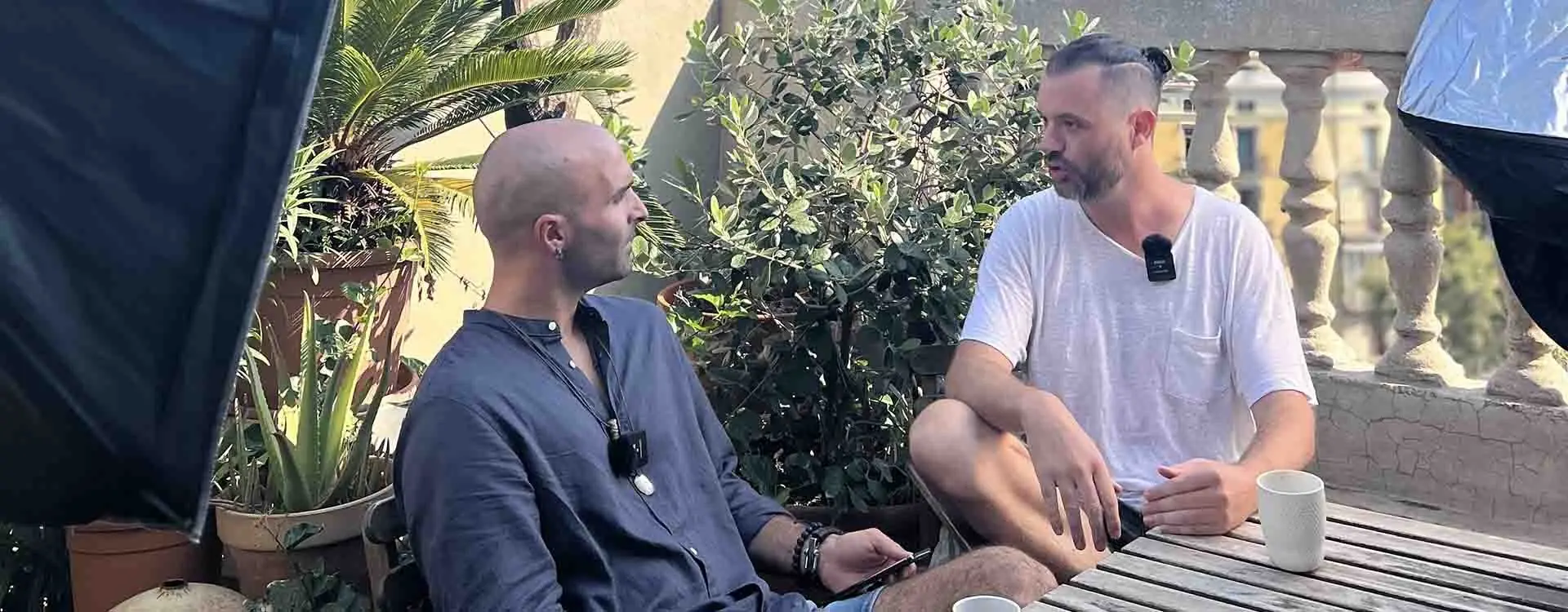
In this exclusive interview, Roger Ubach Bolde (@nope.chef), known for his work as a vegan chef and communicator, traveled to Barcelona to talk with Julien about the origins of Veggie Karma, the challenges they faced, and their vision for a more sustainable future.
As a content creator, Roger uses Instagram to promote a healthy and sustainable vegan lifestyle, sharing recipes, dietary tips, and information on the environmental impact of the food industry. His visual and narrative approach connects with those seeking to adopt more ethical food choices.
If you want to learn how to build a business in the food industry without compromising ethical principles, this conversation is full of lessons on innovation, community, and environmental responsibility. (You can continue reading or click on the video below :)
The birth of Veggie Karma: A path to sustainability
In 2017, Julien and his partner Giovanni saw an opportunity in the Spanish market: there were very few vegan alternatives to cheese, and even fewer that were artisanal and sustainable. Inspired by their passion for plant-based cooking, they decided to embark on the adventure of creating unique products developed from natural ferments that didn’t seek to imitate traditional cheeses but to reinvent them in a more ethical and sustainable way. This is how Veggie Karma was born.
Seven years have passed since, with many changes.
Julien fondly recalls their first experience: Giovanni and he had created their first recipes at home, and at a small market near El Born, they sold out all their products in just a few hours. Additionally, during this first market, they were lucky to have Kevin and Jessica, owners of the vegan store Vegacelona, take an interest in their products. This moment was key for Julien and Giovanni to realize the true potential of their project.
What began as a hobby quickly transformed into a growing business, although they have always chosen to grow at their own pace and without rushing. "We have grown step by step, without investors or shortcuts,” says Julien, highlighting that the success of the project lies in consistency and in constantly listening to their customers.
Today, Veggie Karma is moving to a larger workshop in Mataró, where they will continue to develop vegan cheese alternatives with their unique personality and a firm commitment to sustainability.
Innovation and Creativity in Vegan Cheese Alternatives
From the beginning, Julien and Giovanni wanted to create something different, without trying to imitate traditional cheeses. "We didn’t want to make a camembert or a blue cheese,” explains Julien. Their goal has always been to develop unique products from natural ferments, with their own personality. This search for identity has been key to the success of Veggie Karma because their vegan cheese alternatives don’t try to replicate known flavors but instead offer a new and different experience.
Julien emphasizes the importance of Giovanni’s creativity, describing him as “the little chemist in the lab”, always eager to innovate with new ideas. “He calls me at five in the morning with a new recipe or fermentation method he wants to try,” he recalls, laughing. This constant dynamic of experimentation has been essential in achieving the unique recipes that set Veggie Karma apart in the market.
The philosophy of Julien and Giovanni goes beyond flavor innovation and extends to production methods. All Veggie Karma products are made with organic ingredients and artisan fermentation processes that respect both the environment and the health of consumers. Their focus on sustainability and ethics is integral to their creative process.
Sustainability at every stage
From the start, sustainability has been a fundamental pillar at Veggie Karma. For Julien, it’s inconceivable to talk about vegan products without also addressing environmental impact. "I don’t understand vegan values without the values of love for the planet,” he says. This approach has led him to make key decisions, not only in the production of their vegan cheese alternatives but throughout the product life cycle.
One area where Veggie Karma has put a lot of emphasis is the use of compostable and eco-friendly packaging. The bags they use to package their products, for example, cost five times more than traditional plastic bags. Despite this, Julien and Giovanni are not willing to compromise their principles to cut costs. "All of our packaging, from boxes to tape, is plastic-free and environmentally friendly,” explains Julien.
Another commitment of Veggie Karma is fair trade. The cashews used in their products come from cooperatives in Senegal, and they pay 15% above the market price to ensure that the people involved in production receive a fair wage. "For us, it’s important that everything we do respects not only the environment but also the people behind the ingredients,” says Julien.
This approach to sustainability hasn’t been easy, especially in the face of pressure to compete on price with big chains. However, Julien is adamant: "We prefer to stay true to our principles.” Veggie Karma has chosen to grow at its own pace, without compromising its essence.
The importance of community at Veggie Karma
One of the cornerstones of Veggie Karma’s development has been the close relationship they’ve maintained with their community of customers, both professional and private. From the early days, Julien and Giovanni adopted a very clear approach: listen to those who test their products and adapt to their suggestions. "We’ve always been guided by what our customers tell us. Hey, why don’t you make this? We try it, and if we don’t like it or it doesn’t work, we drop it,” explains Julien.
This process of trial and error, based on direct feedback from their community, has been essential to the evolution of their products. Furthermore, Veggie Karma has managed to create a very special relationship with its customers. Julien describes it with pride: "We receive a lot of love. They write us messages on Instagram, leave us reviews on Google, send us emails... It’s amazing the connection we feel with them."
This connection is further strengthened at fairs and events, where Julien and Giovanni have the opportunity to meet their followers in person. "At fairs, people come up to us and tell us they know us, that they love our products, and that’s priceless,” says Julien. The community not only supports the project but has helped it grow while remaining true to its principles.
The close relationship with their customers has allowed Veggie Karma to follow a totally organic path in its development, without the pressure of large investors or aggressive marketing strategies. For Julien, this relationship with their community is what has allowed them to stay authentic and consistent with their values.
Challenges and the future of the vegan business
The road to success hasn’t been without challenges for Veggie Karma. One of the biggest has been balancing their commitment to sustainability and quality with the need to make their products affordable. "We recently lowered our prices because we want our vegan cheese alternatives to be more accessible, but it hasn’t been easy,” explains Julien. Despite the price drop, they continue to use high-quality ingredients and adhere to fair trade and sustainability principles.
For Julien, growing ethically in a competitive industry requires making tough decisions. "We use compostable bags, we pay our employees well, and we buy cashews at a fair price. All of this increases our costs, but we’re not willing to give it up,” he explains. This stance has kept them out of large distribution chains but has allowed them to build a business that remains true to its principles.
Despite the challenges, Julien sees a promising future for Veggie Karma. They are preparing to move to a much larger workshop in Mataró, which will allow them to increase production and reach more customers, both in Spain and abroad. They are already exporting to countries like France, Germany, and Denmark, and hope to continue expanding their international presence without losing their essence.
"We continue to grow step by step, without shortcuts. We want to maintain our identity and ensure that every decision we make respects our values,” says Julien. As Veggie Karma continues to grow, it is clear that its success is measured not only in numbers but in its positive impact on the planet and the community that supports them.
Posted in:
News
Related posts
-
 Fair Trade Cashews: Our Ethical Choice
At Veggie Karma, we only use ethically-sourced cashews to create our vegan cheese substitutes. If you want to know...Read more
Fair Trade Cashews: Our Ethical Choice
At Veggie Karma, we only use ethically-sourced cashews to create our vegan cheese substitutes. If you want to know...Read more -
What is tofu and what are its secrets?
Goal: to find out all about tofu; its nutritional value, origin, varieties, and why tofu isn’t always necessarily...Read more
-
Lactose-free cheese and other cheeses that intolerants can enjoy
Have you ever suffered from gas, stomach cramps, nausea, abdominal pain, or diarrhea after consuming dairy...Read more
-
5 vegan appetizers for christmas
Do you want to eat your VK cheese in a different way? Here are some simple, quick and delicious recipes.Read more
-
Lupins: Properties, benefits and inconvenients
Did you know that lupines contain more protein than soya? Or that they help to reduce blood sugar levels? Read on,...Read more
Leave a comment
Login to post comments